


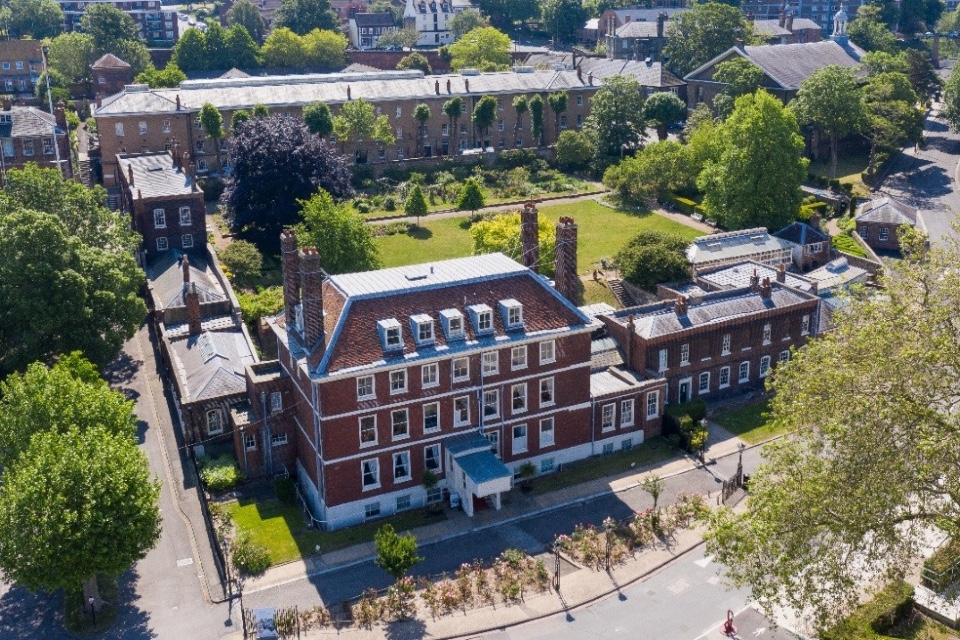
The Commissioner’s House at The Historic Dockyard Chatham is set to reopen this July following a £3.5 million restoration project aimed at repositioning the historic site as a premium destination for corporate events, conferences and private hospitality.
The Grade I-listed building, originally constructed in 1704 for the Commissioner of the Royal Dockyard, is set to reopen this summer following a major redevelopment programme that combines heritage preservation with contemporary workplace and hospitality functionality.
The project reflects the growing challenge of modernising historic assets while maintaining architectural integrity and ensuring operational flexibility. The transformed venue now includes 12 event and meeting spaces, upgraded catering facilities, integrated AV technology and enhanced outdoor areas, all delivered within the constraints of a historically significant property.
A key feature of the redevelopment is the addition of a new Orangery event space, designed to improve visitor flow and expand capacity for conferences, receptions and corporate events. The project also unlocked previously unused second-floor areas, creating additional meeting rooms equipped with modern hybrid working technology, including integrated video conferencing systems and professional display screens.
The restoration demonstrates how FM teams are increasingly required to balance multiple priorities across heritage sites, including compliance, accessibility, technology integration and long-term asset sustainability.
Operational adaptability was also central to the redesign. The venue now supports a broad range of event formats while maintaining efficient access to building services and hospitality operations: an important consideration for estates teams managing mixed-use or commercial heritage environments.
In-house catering facilities have also been upgraded as part of the transformation, reinforcing the importance of integrated hospitality infrastructure within modern venue management strategies.
The project offers a practical example of how heritage estates can be repositioned for commercial and operational relevance without compromising historical character. It also reflects wider trends across the sector, where historic buildings are increasingly being adapted to support flexible workspaces, public engagement and revenue-generating activities.